Help


Home > Blog > Article: "Bitcoin ATM in Switzerland: How to Buy and Sell..."
NEW!
A regular ATM gives you access to funds in your bank account. A Bitcoin ATM is used to exchange cash for cryptocurrency or vice versa:
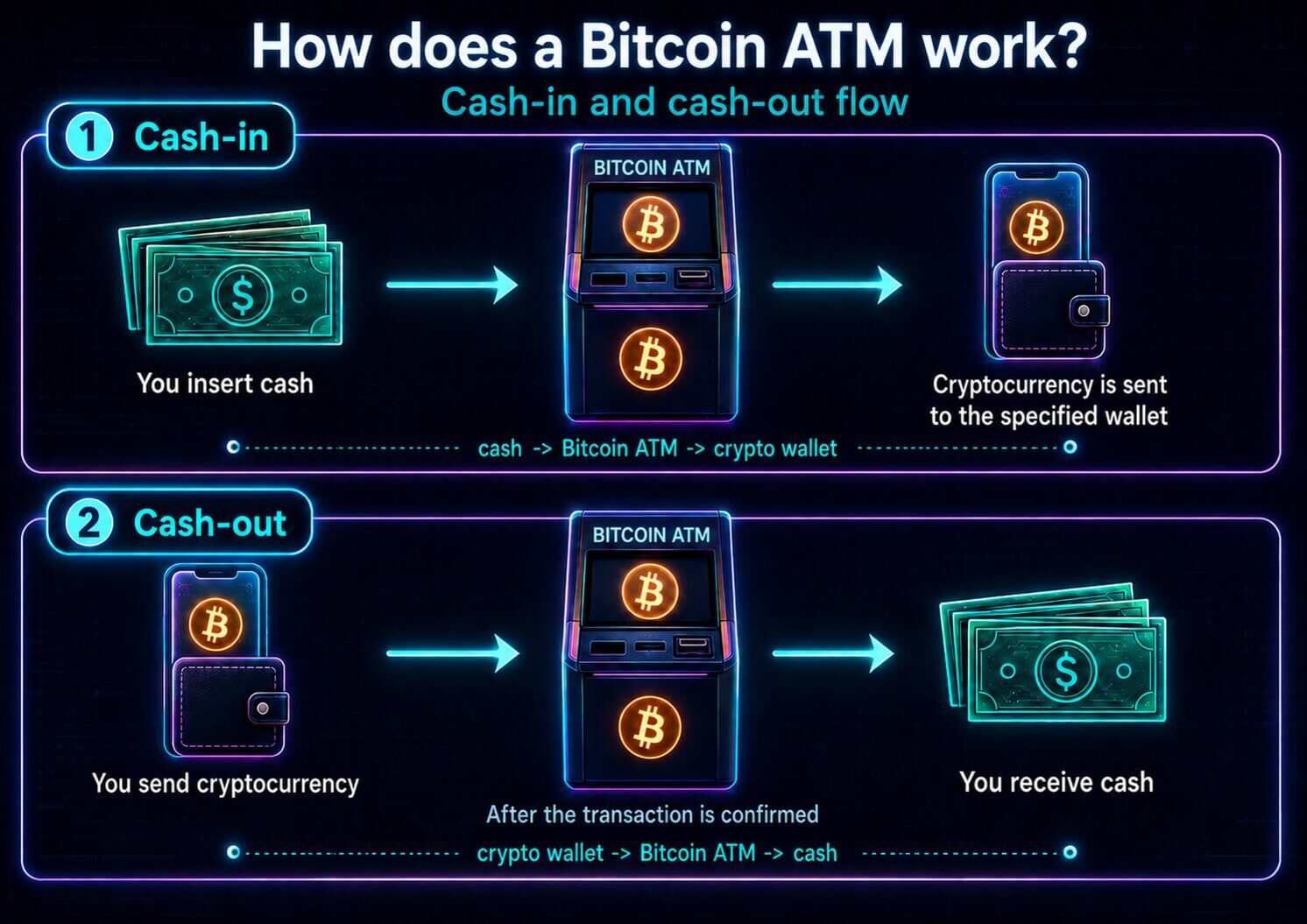
A Bitcoin ATM is not an exchange and does not maintain an account for you. After you purchase BTC, it is sent to the wallet address you provided during the transaction. You are responsible for access to your funds, wallet backups, and wallet security. Not every machine supports transactions in both directions, so it is worth checking the features available at a specific location before visiting.
Buying Bitcoin at a Bitcoin ATM is similar to using a self-service checkout. The process on the screen usually takes a few minutes, but the time it takes for the BTC to be credited depends on the current activity on the Bitcoin network and the number of confirmations required.
Open the wallet app and select the option to receive BTC. A QR code with your Bitcoin address should appear on the screen.
On the Bitcoin ATM screen, select “Buy,” then Bitcoin. The machine will display the next steps of the transaction.
Follow the on-screen instructions and scan the required document. The scope of verification may vary depending on the operator, the transaction amount, and applicable procedures.
Hold the QR code from your wallet app up to the machine's scanner. Before confirming, make sure the address belongs to you.
Do not use a QR code or address sent by someone else.
Insert the desired amount of cash into the machine. Accepted currencies vary by location. Selected Bitcoin ATMs in Switzerland accept CHF and EUR.
Before confirming, compare:
Once confirmed, the machine will begin processing the transaction. Keep the receipt and transaction ID, as you may need them when contacting customer support.
Once you're done, check the transaction status in your wallet. The BTC may initially appear as a pending transaction before being confirmed on the blockchain.
Selling Bitcoin at a Crypto ATM works in the opposite direction. You send BTC to the address provided by the machine and collect cash once the transaction has been confirmed.
On the device's screen, select "Sell," then Bitcoin. Enter the amount of BTC or the value in CHF that you want to withdraw.
The Bitcoin ATM will display a QR code with the address to which the funds must be sent. Scan it with your wallet and carefully check the details before confirming the transfer.
Once the transaction begins, the system will generate a barcode or another form of confirmation needed to collect the cash later.
The QR code is used to send BTC, while the withdrawal code allows you to receive CHF once the transaction is confirmed.
The waiting time depends on the Bitcoin network's performance and the number of confirmations required by the operator. You can check the transaction status by following the instructions displayed by the system.
Once you have received the required confirmations, return to the machine, scan the withdrawal code, complete the required verification, and collect your CHF.
Before visiting, it is worth checking whether the machine has sufficient cash available. If a particular Bitcoin ATM does not have enough CHF, you may be able to use the withdrawal code later or at another machine in the same network.
The cost of a transaction is not limited to a single fee. Key factors include:
The most useful figure is in the summary: how much BTC you’ll receive for a specific amount, or how much CHF you’ll get after the sale. This is the figure you should compare with alternatives. Bitcoin ATMs are usually more expensive than large online exchanges because they handle cash and maintain physical infrastructure. Their advantage, therefore, isn’t always the cost, but rather the ability to exchange directly without a bank transfer.
Yes. Using a Bitcoin ATM in Switzerland requires mandatory identity verification with a valid ID. A Bitcoin ATM should therefore not be presented as a way to exchange cash for cryptocurrency anonymously.
Swiss AML regulations cover the professional exchange of cryptocurrency for cash and require operators to apply KYC procedures. At the same time, using the machine may not require creating an account, providing a phone number, or installing an app. These are separate issues, however: not having to register an account does not remove the requirement to verify your identity.
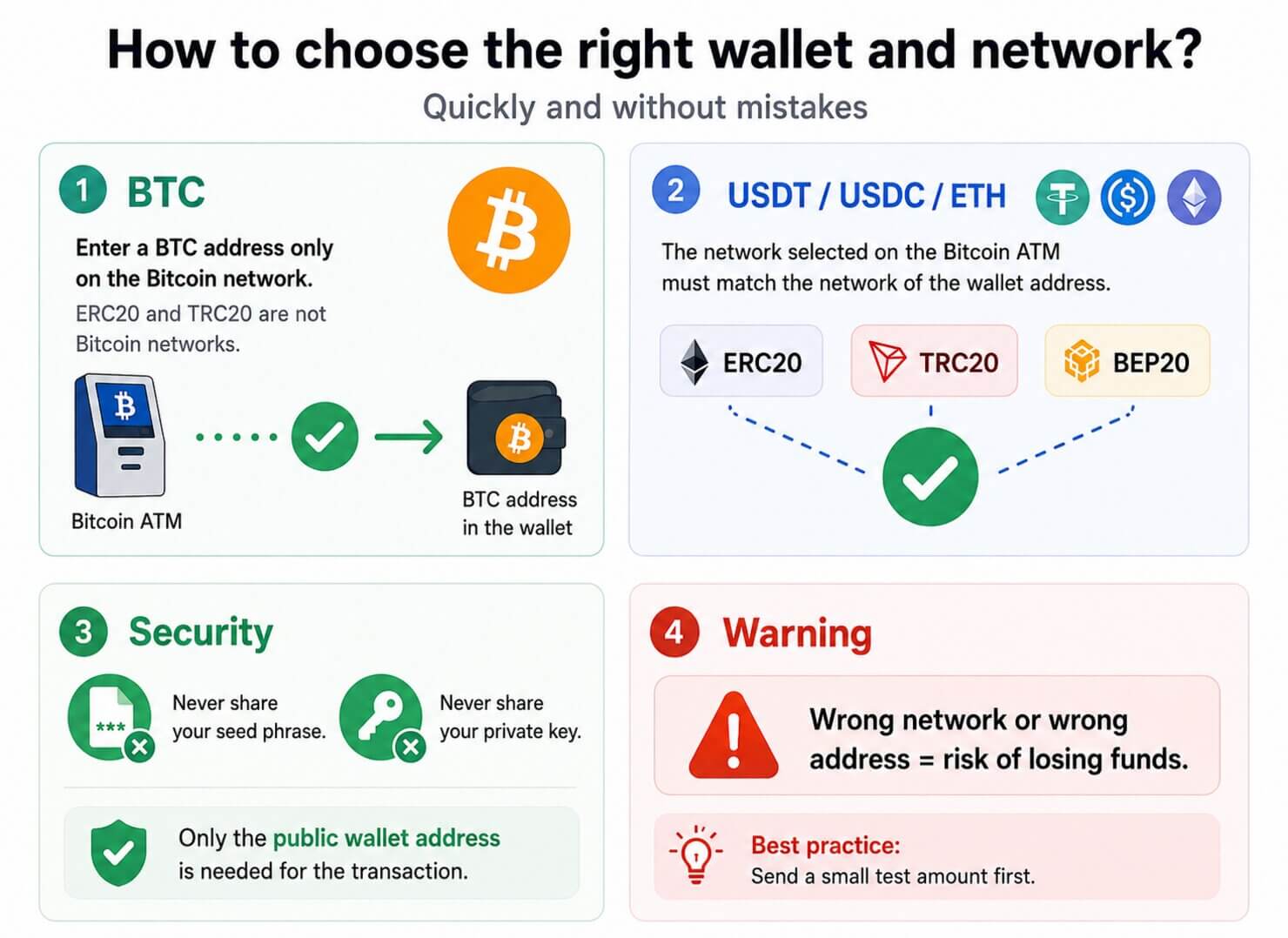
Blockchain transactions are generally irreversible. The Swiss NCSC warns about investment scams and pressure from purported advisers. If you have any doubts, step away from the machine and contact the operator directly.
The most important difference is cash handling. A Bitcoin ATM allows users to buy cryptocurrency without making a bank transfer and, at two-way machines, to sell it and collect CHF. Purchased funds can be sent directly to the user's own wallet. This model can also be useful for tourists and cross-border users who do not want to open an account with a Swiss bank.
However, this does not mean that there is no verification process or a guarantee of immediate payout. The usability of a Bitcoin ATM depends on specific conditions: location, hours of operation, the machine’s status, available cash, the supported cryptocurrency and network, and the final transaction rate.
A Bitcoin ATM therefore does not replace an exchange in every use case. It is primarily a physical cash-to-crypto and crypto-to-cash channel for people who want to connect cash with their own digital wallet.
No, provided the machine accepts cash. However, you need your own wallet and the identification document required by the operator.
You need a cryptocurrency wallet - usually a mobile app or a hardware wallet. You do not need to install a separate operator app or create an account.
No. Buying Bitcoin at a Bitcoin ATM requires identity verification by scanning a valid identification document. This is part of the AML/KYC procedures applied by operators in Switzerland.
Using the machine usually takes a few minutes. The time it takes for the funds to appear depends on blockchain congestion and the number of required confirmations. When selling, you can collect the cash only after meeting the operator's requirements.
It depends on the specific machine and operator. In addition to Bitcoin (BTC), some Bitcoin ATMs also support ETH, LTC, USDT, USDC, TRX, SOL, and BNB, among others. For tokens, you should also check which blockchain network they are available on, as sending funds over the wrong network may result in their loss.
Do not travel to the machine without checking the map first. If the transaction has already begun, keep the code and transaction ID, check another machine in the same network, or contact the operator's customer support.
NEW!
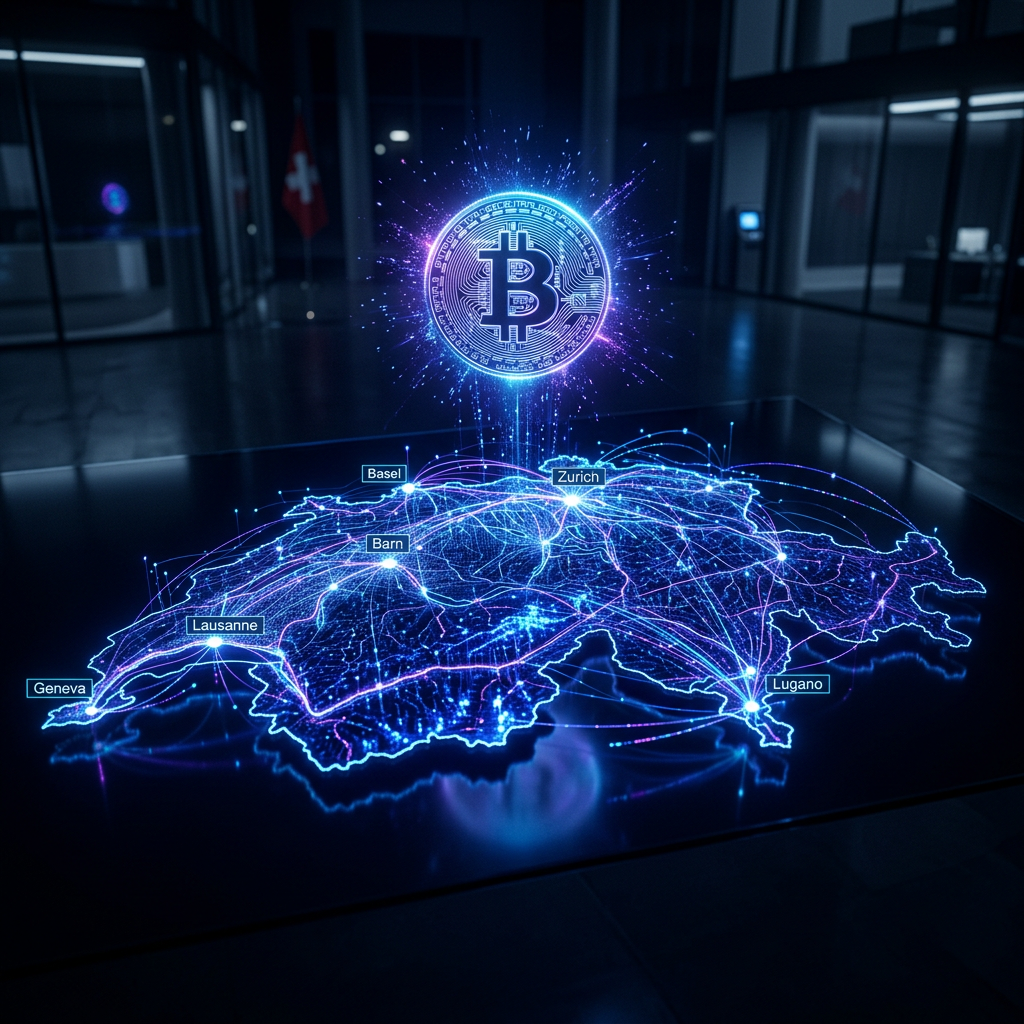
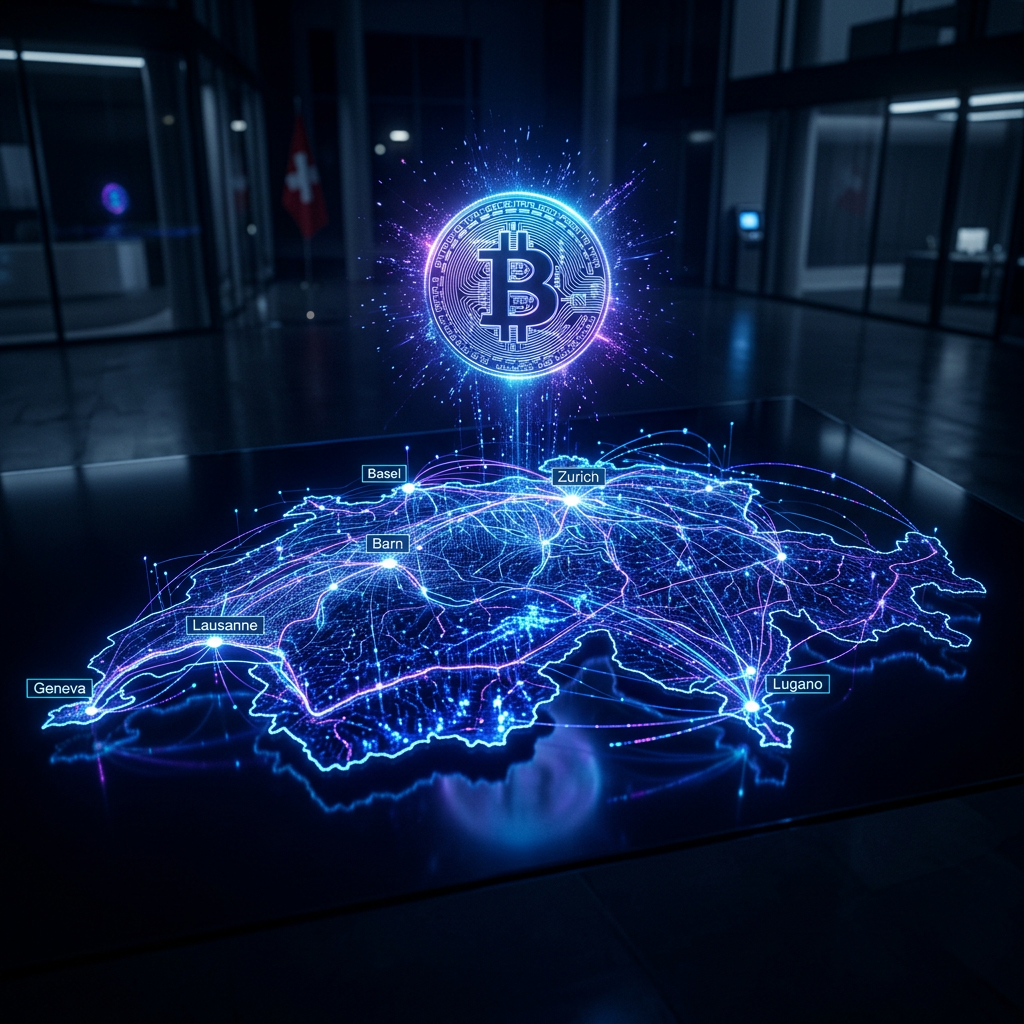
Rothbard.eu is developing a platform that aggregates Bitcoin ATM locations in Switzerland, enabling users to find locations where they can buy and sell BTC and other cryptocurrencies for cash. Bitcoin ATMs are available in cities including Zurich, Geneva, Basel, Lausanne and Lucerne; their current status and cash availability can be checked online on the website’s map.
This material is for informational purposes only. It does not constitute investment, tax or legal advice.