


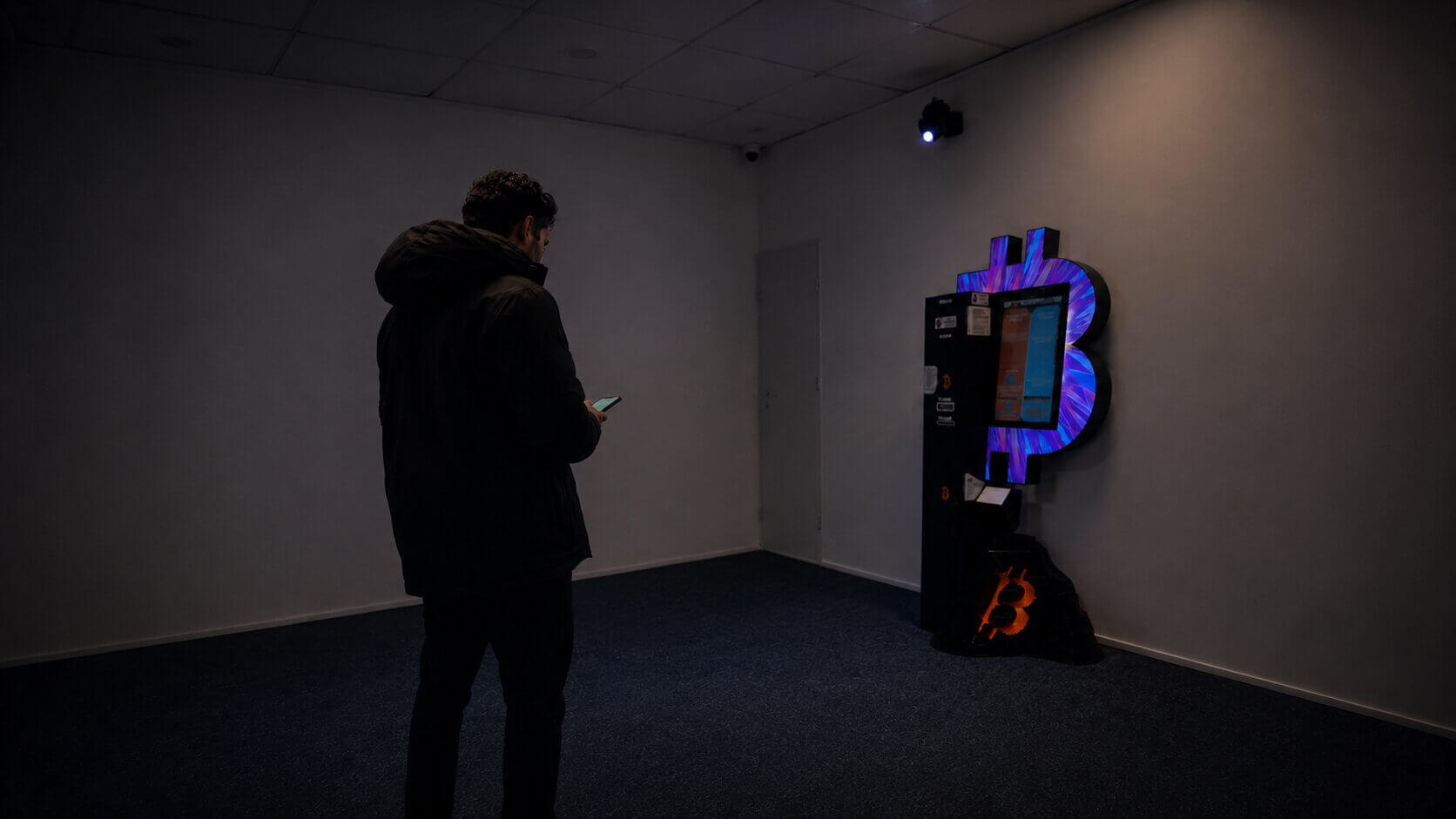
First time at a Bitcoin ATM. Cash in hand and one question: “Does it really work?”

It was a perfectly ordinary afternoon in Switzerland. People hurried to the shops, someone stopped for coffee, and cars moved slowly along the street. Among the shopfronts and city signs stood a machine that, at first glance, could have been mistaken for an ordinary cash machine.
Except that the screen displayed the Bitcoin symbol instead of a bank logo.
The man stopped in front of the machine. He held a phone in one hand and a few banknotes in the other. He had read about cryptocurrencies before. He knew what Bitcoin was, followed its price, and even knew a few people who owned it.
Yet he had never bought cryptocurrency with cash before.
For a moment, he stared at the screen and wondered whether to walk away.
Does it really work? Will the funds actually reach his wallet? What if he selects the wrong option?
It all started before he even approached the machine
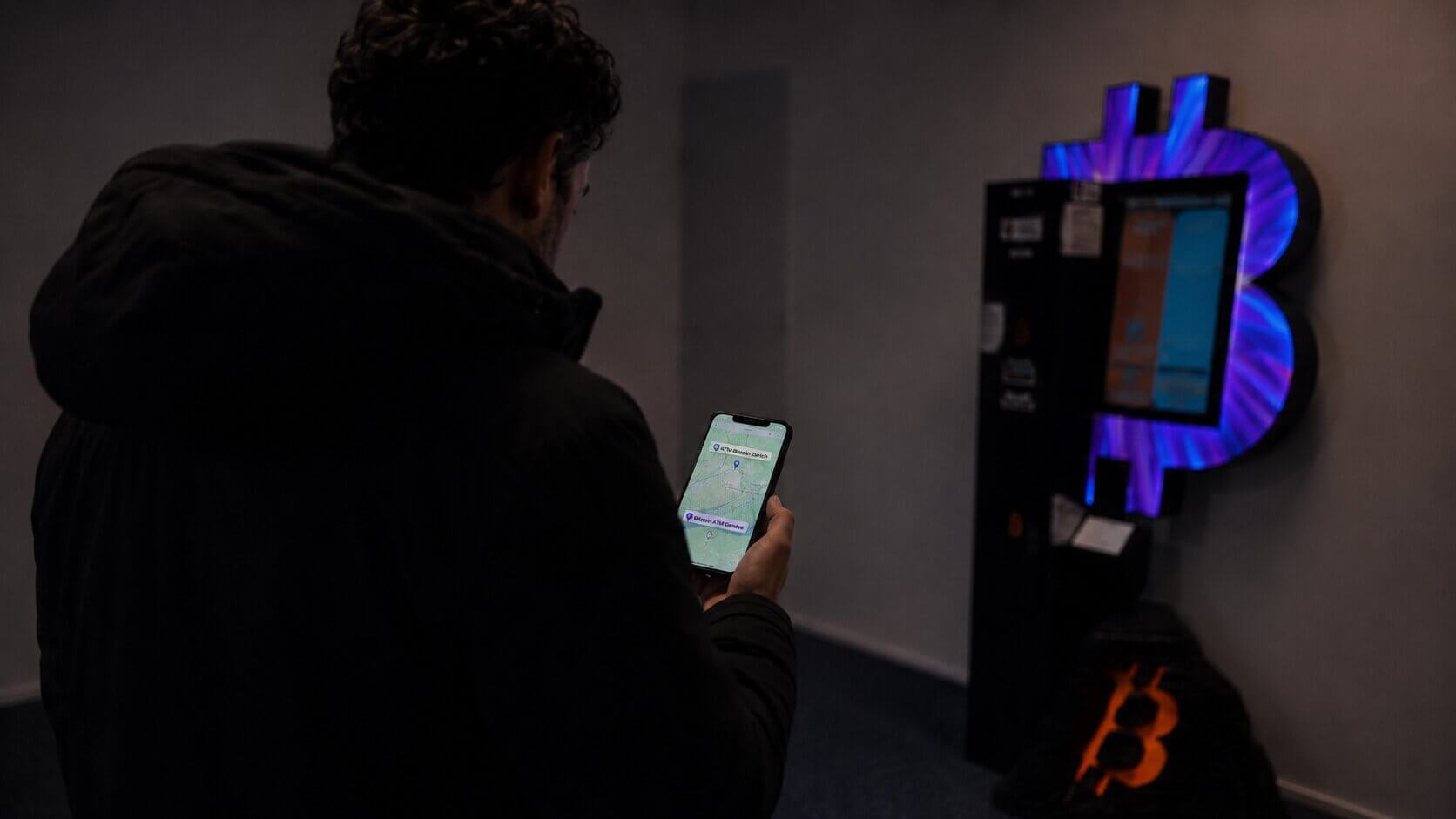
Before leaving home, he checked the Bitcoin ATM map of Switzerland. He wanted to make sure that the machine he had chosen was active and accessible at that time.
He also read that he would need his own cryptocurrency wallet to make a purchase. He did not have to open an account on an exchange or use an app specified by the operator. The wallet simply had to support the selected cryptocurrency and display a receiving address as a QR code.
He downloaded the app from an official source, created a wallet, and wrote down the recovery phrase in a safe place. He did not photograph it or send it to anyone. He knew that anyone who obtained those words could gain access to his funds.
Now, standing in front of the ATM Bitcoin machine, he opened the option to receive cryptocurrency in the app.
A distinctive black-and-white square appeared on the phone's screen.
The QR code was ready.
The first step turned out to be easier than he had expected
He tapped the device's screen and selected the option to buy cryptocurrency.
The Bitcoin ATM guided him through the next steps. First, he selected the cryptocurrency. Then, in accordance with the applicable AML rules, he scanned his identity document.
The machine then asked for his wallet address.
This was the moment he feared most. A cryptocurrency address consists of many characters, and a mistake could mean sending funds to the wrong place. However, he did not have to enter it manually.
He raised his phone and held the QR code in front of the scanner.
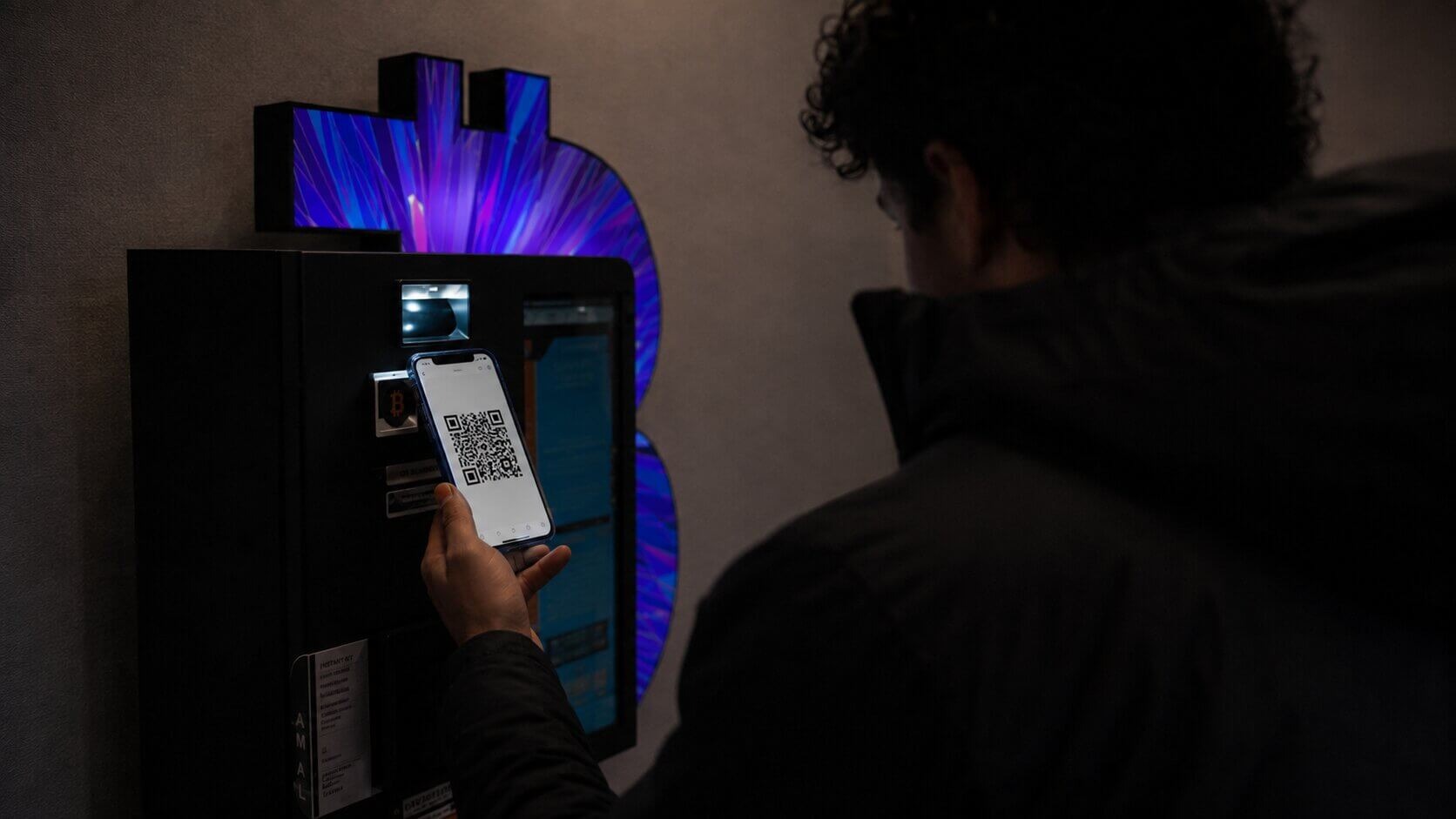
A beep.
The address had been scanned.
Before moving on, he compared the beginning and end of the scanned address with the address displayed in the app. Everything matched. He also checked the exchange rate, fees, and the estimated amount of cryptocurrency he would receive.
Only then did he take out the first banknote.
The machine accepted the cash
The banknote disappeared into the slot, and the amount on the screen changed immediately.
Then a second. And another.
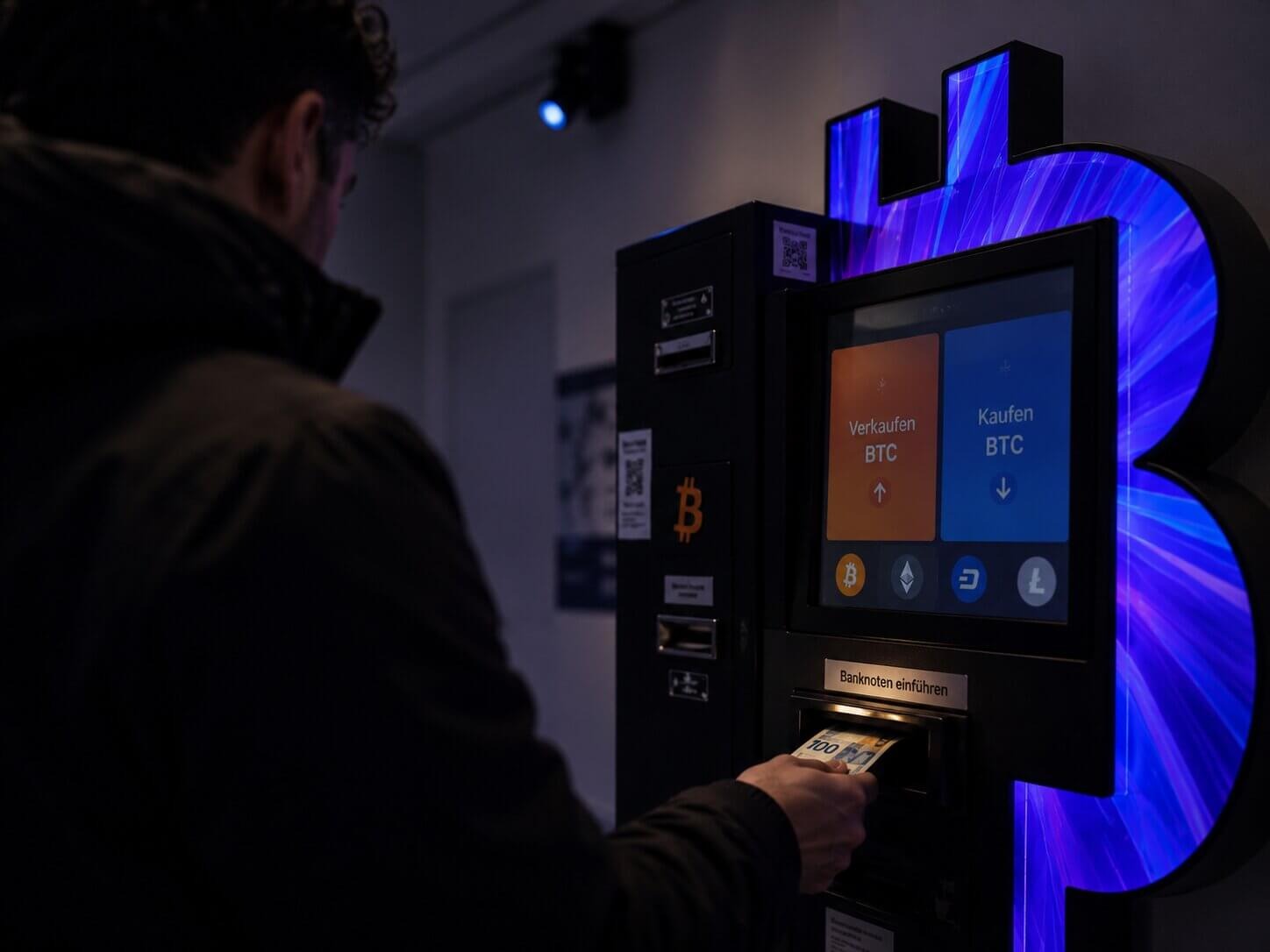
Just a few minutes earlier, cryptocurrencies had seemed to him like something that existed only on the internet: numbers on charts, buzzwords in articles, and a topic of conversation among people who knew far more about technology than he did.
Now he watched as physical cash was converted into digital funds sent to his own wallet address.
A summary appeared on the screen.
He checked everything one more time: the selected cryptocurrency, the amount, and the address. He knew that a transaction recorded on the blockchain usually cannot be reversed. He pressed the confirmation button.
The Bitcoin ATM printed a receipt.
And then all that was left to do was wait.
A few dozen seconds can feel surprisingly long
He looked at his phone.
The balance still had not changed.
He refreshed the app, even though he knew it probably wouldn't speed things up. A moment passed. Then another.
Did he do everything correctly?
He looked at the printout again. It contained information that could be used to identify the transaction. With it, he could check the transaction status and confirm that it had been broadcast to the network.
This is an important point in any first transaction: funds do not always appear in the wallet immediately. Processing time depends on factors including the selected cryptocurrency, the blockchain network, its current level of activity, and the required number of confirmations.
A balance that does not update immediately does not necessarily mean that something has gone wrong.
A moment later, a new transaction appeared on his phone screen.
At first, it was pending. Later, it was confirmed by the network.
The cryptocurrency was sent to the correct address.
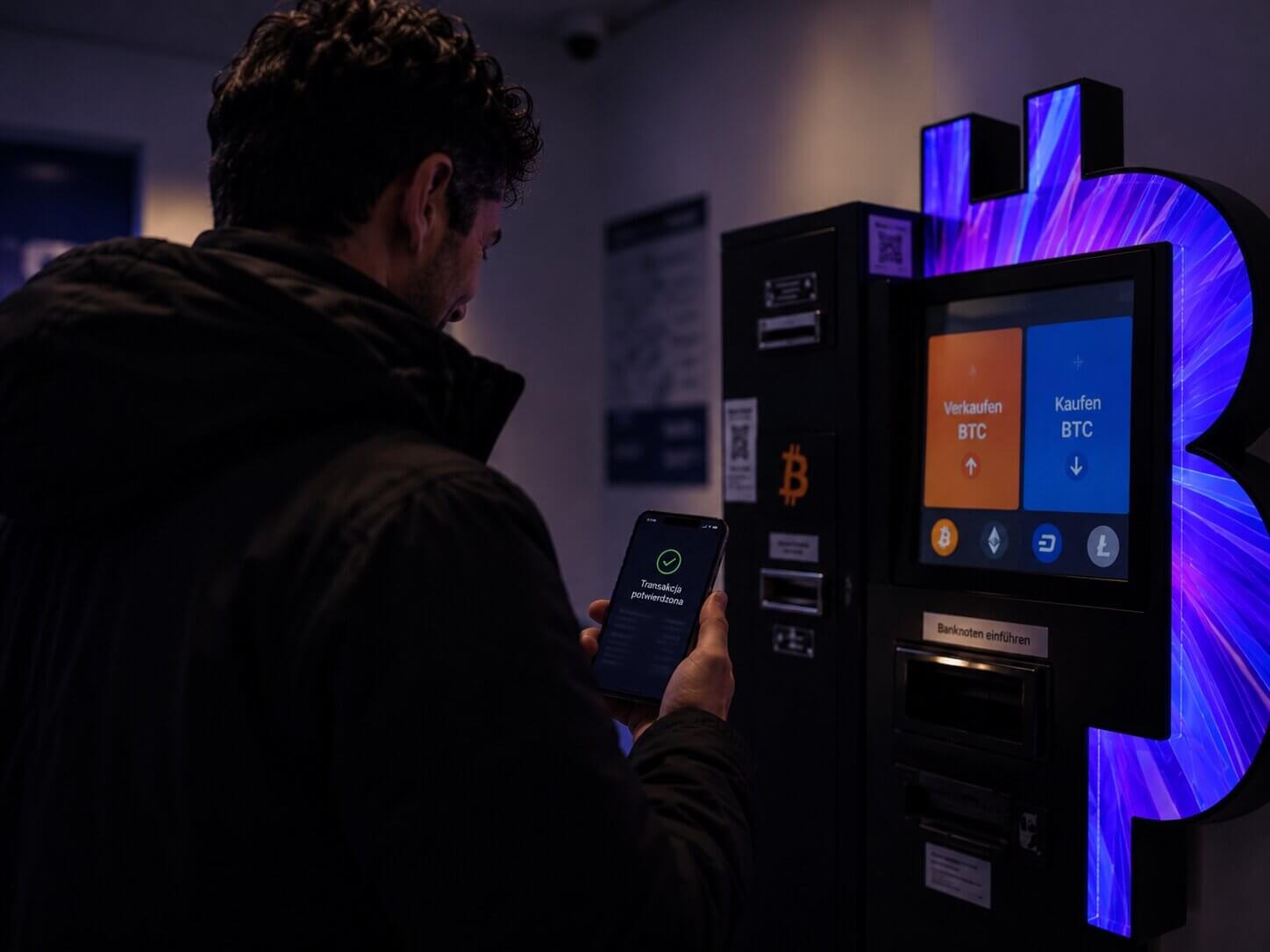
The man looked at the Bitcoin ATM once more, as if to make sure that he had really just done it. He smiled and put the receipt in his wallet.
The entire process turned out to be much simpler than he had imagined.
The most important part, however, did not happen on the screen
That day wasn't just about buying a small amount of cryptocurrency.
More importantly, something that had previously seemed abstract became understandable. The man saw how a wallet address works, what a QR code is used for, and why every detail should be checked carefully before confirming a transaction.
He also learned that ease of use did not remove the need to act responsibly.
A Bitcoin ATM follows the user's instructions, but it cannot verify whether the scanned address really belongs to the user. Nor can it recognize whether someone is persuading the user to make a transaction under false pretences.
That is why the most important rule is simple: the cryptocurrency being purchased should be sent to a wallet controlled by the buyer.
If someone claiming to be a bank employee, police officer, technical support agent, or investment adviser instructs you to deposit cash into a Bitcoin ATM and scan a QR code they sent you, stop the transaction. The code may lead directly to a scammer's wallet, and recovering the transferred funds may be impossible.
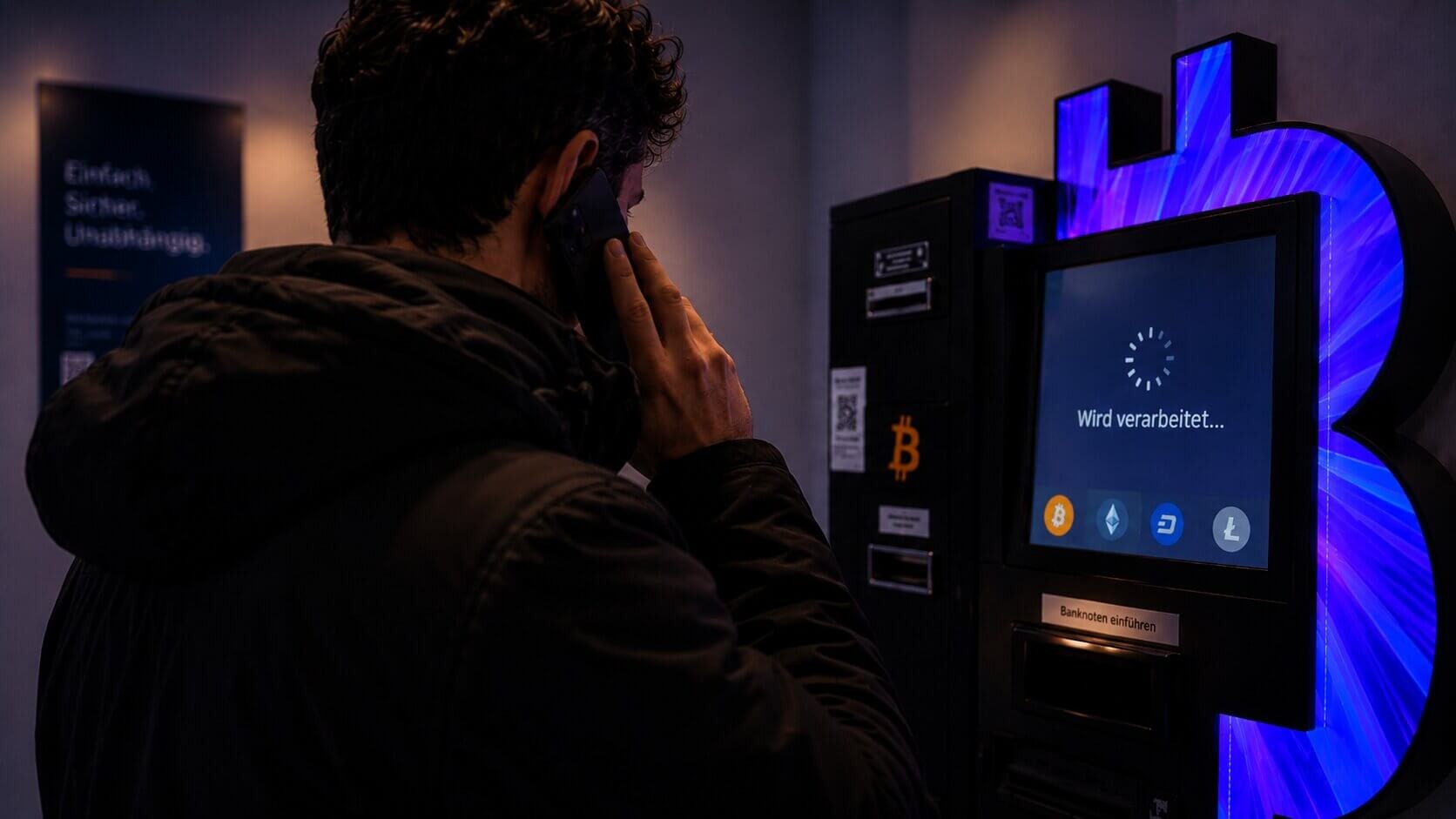
That day, the QR code displayed on the phone belonged to him. No one had sent it to him in a message, and no one was instructing him over the phone. He checked the address, the transaction terms, and the amount himself.
This allowed him to retain control over the entire process.
A Bitcoin ATM brought two different worlds together
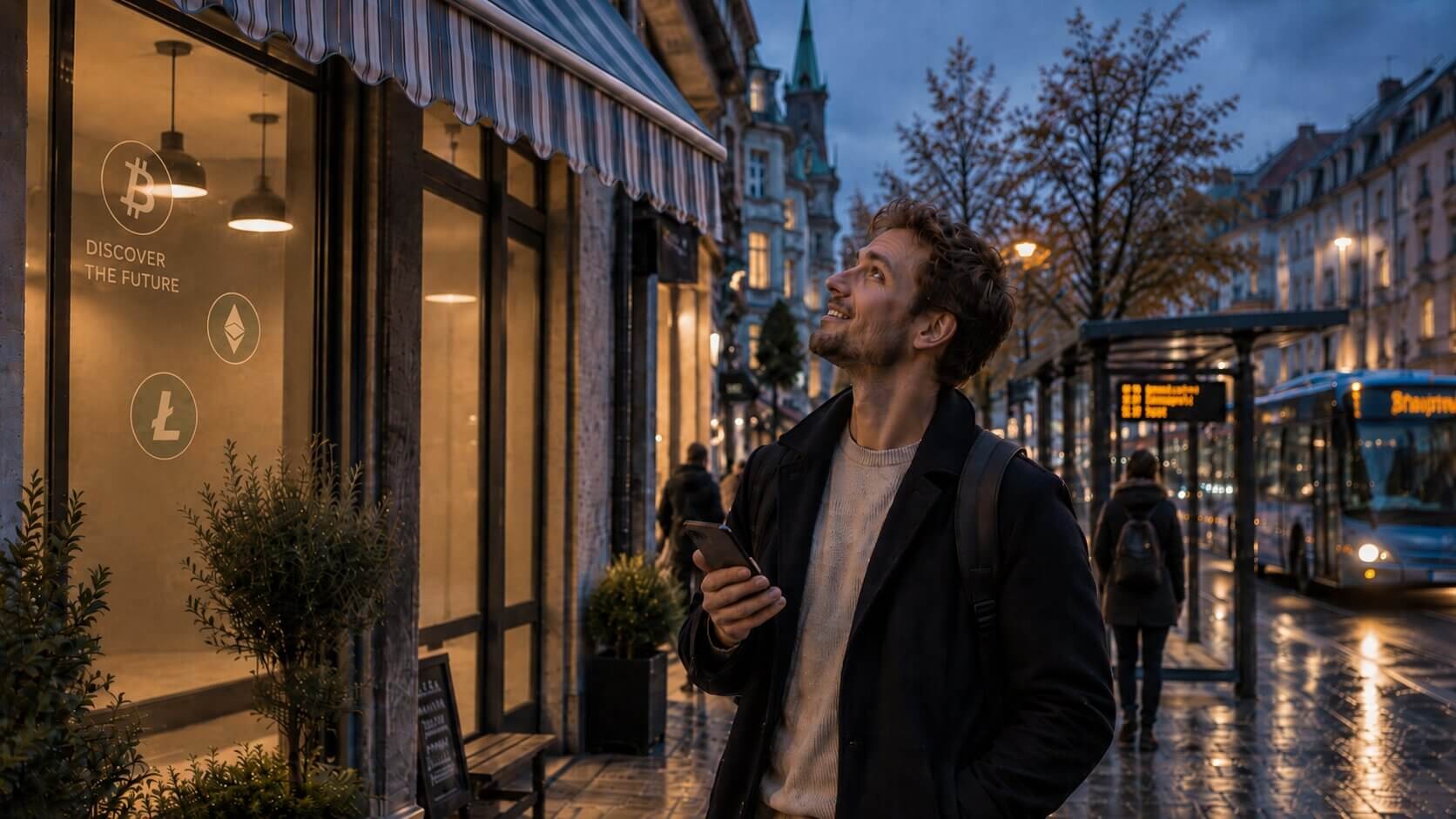
As he walked away from the machine, the street looked exactly the same as before. Cars were still driving by, someone was coming out of a store, and someone else was waiting at the bus stop.
Only one thing had changed.
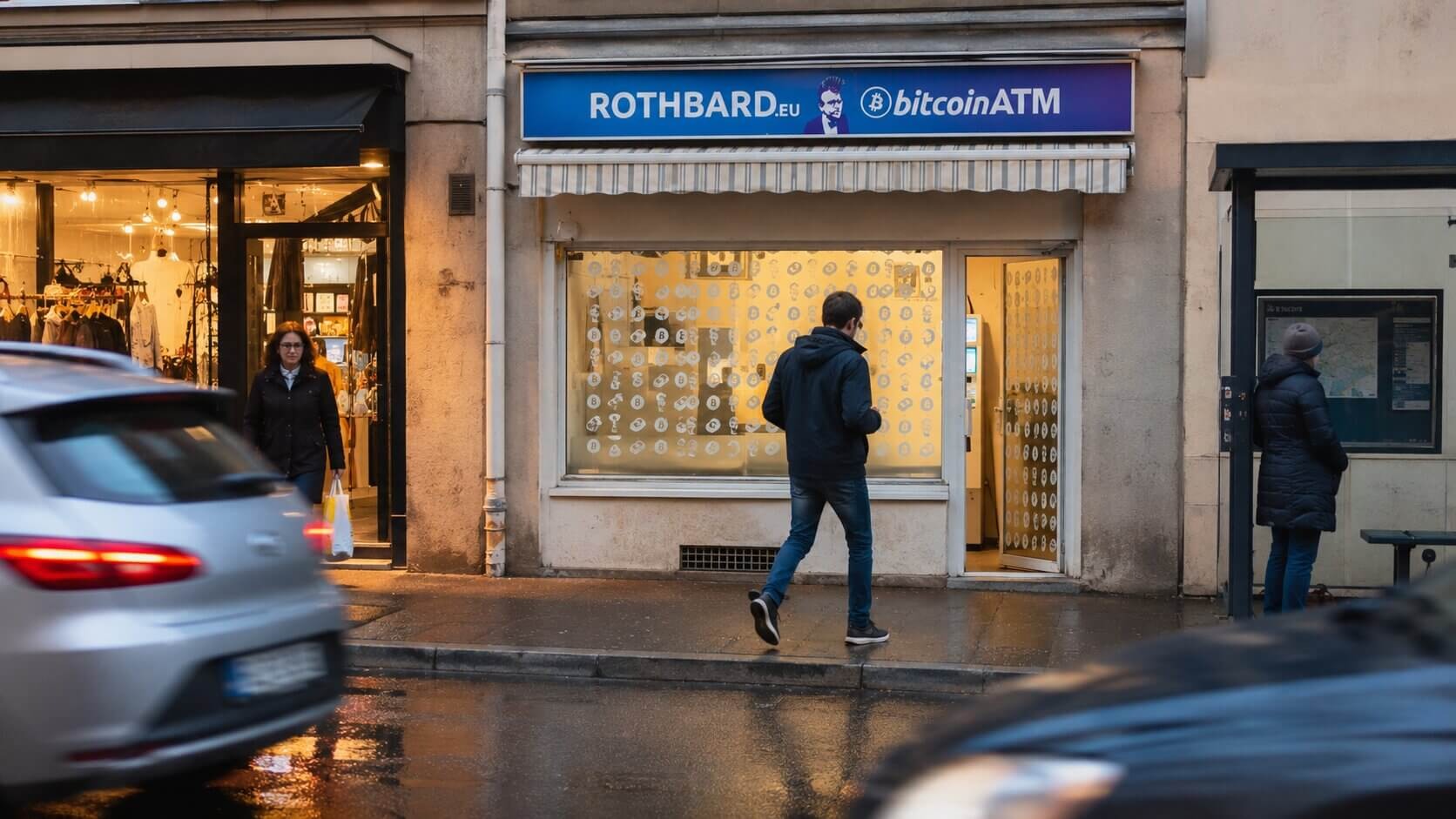
What had seemed just minutes earlier like a complicated process intended mainly for specialists had become an ordinary experience: cash, his own wallet, a QR code, and a transaction recorded on the blockchain.
This is precisely the practical role of a Bitcoin ATM. The machine bridges the world of physical cash and digital assets. It does not make investment decisions for the user or eliminate the risks associated with cryptocurrencies. It does, however, make the transaction itself easier to carry out.
A first purchase does not have to mark the beginning of a major investment. It can simply be a small trial that helps someone experience the technology in practice.
Sometimes, it is only when the first transaction appears on the screen of his own phone that blockchain stops being merely a difficult word he has read online.
It became something real.
Where does the next story like this begin?
The Rothbard.eu map shows Bitcoin ATM locations in different regions of Switzerland. For each location, it is worth checking the machine's current status, opening hours, supported cryptocurrencies, and any other information needed before visiting.
Perhaps the next story will also begin with a person standing in front of a screen, holding cash in one hand and a phone in the other.
With a brief moment of uncertainty.
And with exactly the same question:
“Does it really work?”
Summary
A first transaction at a Bitcoin ATM can feel uncertain, but in practice it comes down to a few straightforward steps: preparing your own wallet, scanning a QR code, checking the details, and depositing cash. The most important things are to stay calm, pay close attention, and make sure the cryptocurrency is sent to an address controlled by the buyer.
A Bitcoin ATM does not eliminate the risks associated with cryptocurrencies, but it makes a technology that still feels remote to many people easier to access. Sometimes, one small transaction is enough to show that blockchain is not just about charts and complex concepts, but is also a solution that can be used in everyday life.
NEW!
Rothbard.eu is developing a platform that aggregates Bitcoin ATM locations in Switzerland, enabling users to find places where they can buy and sell BTC and other cryptocurrencies for cash. Bitcoin ATM kiosks are available in Zurich, Geneva, Basel, Lausanne, Lucerne, Lugano, Mendrisio, and other locations; their current status and cash availability can be checked online on the platform’s map.
This material is for informational purposes only. It does not constitute investment, tax, or legal advice.