Help


Home > Blog > Article: "How to Invest in Bitcoin"
It makes the most sense to start with a small investment, without using leverage, with transparent fees and a clear strategy for storing your funds. When it comes to Bitcoin, it's not just the investment choice itself that matters, but also the security of your account, digital wallet, and access to your funds.
In Switzerland, Bitcoin can be purchased in various ways: through a cryptocurrency exchange, a bank, or a broker; via an ETP that tracks the price of BTC; or locally at a Bitcoin ATM. Before buying, however, it is crucial to understand whether you are actually purchasing real Bitcoin or merely a product whose value is based on its price.
In 2026, the ability to purchase Bitcoin will be available through an increasing number of channels: cryptocurrency exchanges, brokers, dedicated apps, banks, and even local retailers. However, easier access does not mean less risk. Bitcoin remains a volatile investment, so users should understand the fundamental differences between actually owning the digital currency, using it as a trading instrument, and simply speculating on price movements.
In practice, investing in Bitcoin involves three main approaches: purchasing the digital currency directly, gaining exposure through a publicly traded financial instrument, or trading derivatives. This distinction is crucial because each of these paths entails a different level of control, risk, and personal responsibility.
1. BTC spot – real ownership of Bitcoin
BTC spot refers to the purchase of actual Bitcoin as a crypto asset. It is the most direct option for people who want to actually own BTC and be able to withdraw it to their own wallet, if the provider allows it.
2. Bitcoin ETPs/ETNs/ETCs – price exposure without owning BTC
In Europe, investors are more likely to encounter Bitcoin ETPs, ETNs, or ETCs than traditional ETFs. These products provide exposure to the price of BTC through a brokerage account, but they typically do not involve direct ownership of Bitcoin or the ability to withdraw BTC to a personal wallet.
3. Bitcoin CFDs – High-Risk Trading
A CFD does not grant ownership of Bitcoin. It is a contract that tracks changes in the price of BTC, often involving leverage, and therefore is not a good first step for beginner investors.
In Switzerland, people interested in investing have several simple ways to access Bitcoin.
They can buy real Bitcoin through various channels. Alternatively, they can gain exposure to its price movements through an exchange-traded investment product or use a physical location such as a Bitcoin ATM.
There is, however, a key difference: only when purchasing actual Bitcoin does the user have the ability to transfer those assets to their own digital wallet, provided the chosen provider allows withdrawal of cryptocurrencies.
For beginners, the most important thing shouldn’t be finding the “perfect moment” to buy. It is more important to understand the buying process, costs, risks, and the rules for securely storing funds. A sensible start usually involves investing a small amount, avoiding financial leverage entirely, carefully checking all fees, and making an informed decision about whether to keep Bitcoin on the platform or transfer it to your own wallet.
Buying Bitcoin shouldn’t start with the question “Where do I click?”, but with a decision: why are you buying BTC, how much can you afford to risk, and where will you store it? For more information, see our article“How do I buy Bitcoin?”
1. Define your goal and time horizon
First, decide whether Bitcoin is meant to be a long-term investment, a way to diversify your portfolio, a small educational investment, or a short-term speculation. This will determine the amount you invest, the level of risk, how often you buy, and how you store your BTC.
2. Determine the amount you can afford to lose
Bitcoin is a highly volatile asset, so don’t invest money you need for rent, taxes, bills, an emergency fund, or upcoming expenses.
3. Choose a purchase method
You can buy BTC through various channels, such as a bank or a physical retail location. In Switzerland, one way to buy real BTC is via a Bitcoin ATM Luzern, for example those listed in the Rothbard database—especially for people who want to buy BTC locally and without a traditional brokerage account.
4. Check the fees and how BTC is stored
Before buying, check whether you are purchasing real Bitcoin or just a product that tracks its price. Compare commissions, spreads, withdrawal fees, network fees, and asset custody policies. If you want real BTC, also check whether the provider allows you to withdraw Bitcoin to your own wallet.
5. Buy a small amount without leverage
Your first trade should be small and without leverage.
6. Decide where to store your BTC
After purchasing, you have two main options: storing it with a service provider or using your own wallet.
After purchasing BTC, you can leave your funds with the provider (custodial storage) or transfer them to your own wallet. Custodial storage is more convenient, but it requires trusting the platform. Your own wallet gives you greater control, but it makes you fully responsible for your seed phrase. For larger amounts, consider a hardware wallet and perform a small test transaction first.
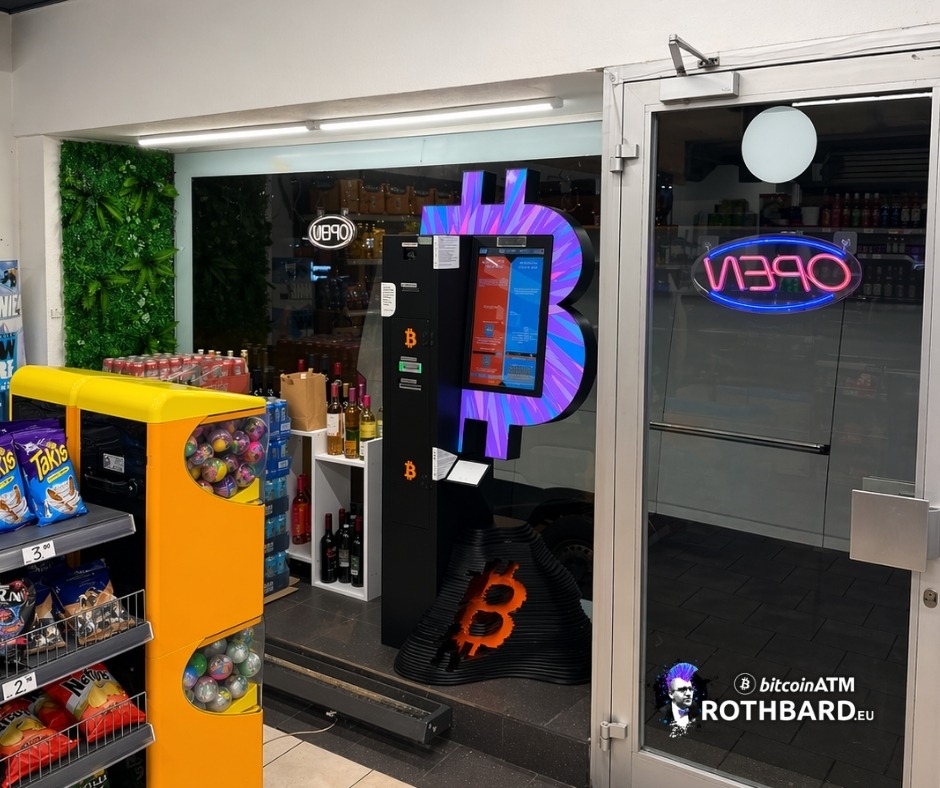
Bitcoin ATMs in Switzerland can be a good option for people who want to buy actual Bitcoin locally and maintain control over their funds, rather than simply gaining exposure to the BTC price through a financial product or trading platform.
A Bitcoin ATM can be convenient for people who want to buy BTC locally, with cash, without using a traditional brokerage account, and with the option to transfer funds directly to their own wallet. A Bitcoin ATM does not replace an investment strategy—it is simply one way to gain access to real BTC.
Before making a purchase, it’s a good idea to check the fees, limits, requirements, the accuracy of your wallet address, and the current status of the Bitcoin ATM. For Bitcoin ATMs listed in the Rothbard database, you can, for example, check locations, opening hours, online status, and availability of individual Bitcoin ATMs in Switzerland.
Would you like to check a local option for buying BTC in Switzerland?
Many beginners try to buy Bitcoin at the “perfect moment,” but in practice this is difficult because its price fluctuates rapidly. Decisions made on the basis of emotion often increase the risk of making mistakes.
That is why some investors opt for a DCA strategy—that is, buying Bitcoin regularly, such as weekly or monthly—rather than investing a large sum all at once. While this does not guarantee profits or eliminate risk, it helps investors follow a clear plan and reduces the pressure of trying to time the market.
At first, invest only an amount you can afford to lose. Don’t buy BTC on credit, and don’t increase your position out of FOMO. If a 30–50% drop in price would force you to sell in a panic, the amount is probably too large.
Bitcoin is a speculative asset and does not function like a traditional bank deposit with deposit insurance. Before purchasing, you need to clearly understand the key risks:
The best way to start investing in Bitcoin isn’t about having perfect market timing or choosing the most popular platform. What’s more important is understanding what you’re buying, what risks you’re taking, where your funds will be stored, and how they’ll be secured.
A sensible start isn't a large first transaction but a clear strategy: a small amount, no leverage, transparent fees, good protection for your funds, and awareness of whether you're buying actual Bitcoin or only a product based on its price.
Start with a small amount, buy without leverage, and first make sure you’re acquiring real BTC rather than ETPs/ETNs/ETCs or CFDs.
No. You can buy a fraction of a BTC. Your first transaction can be small and serve mainly to familiarize yourself with the process of buying and storing Bitcoin.
Buying BTC means owning actual Bitcoin. ETPs/ETNs/ETCs provide exposure to the price but typically do not represent on-chain ownership of BTC. CFDs are instruments used to speculate on the price, often with leverage, without actually owning Bitcoin.
Yes. In Switzerland, a Bitcoin ATM can be used to buy real BTC locally with cash. Before making a transaction, check the status and location of the Bitcoin ATM using a map of Swiss Bitcoin ATMs.
A Bitcoin ATM is not an investment strategy. It is a way to access BTC, like a crypto platform, a Bitcoin ATM, or a bank. The investment decision itself is about how much risk you are willing to accept, whether you want to own real BTC, and how you will store it.
Only as much as you can afford to lose without jeopardizing your financial stability. Bitcoin should not replace your emergency fund, nor should it be purchased with money needed for everyday expenses.
No. Bitcoin does not guarantee a profit. It is a volatile and risky asset. Promises of guaranteed, quick profits should be treated as a red flag.
Rothbard.eu is developing a platform that aggregates Bitcoin ATMs in Switzerland, allowing users to find locations where they can buy and sell BTC and other cryptocurrencies for cash. The machines are available in cities such as Zürich, Genève, Basel, Lausanne and Luzern, and their current status and cash availability can be checked online on the service’s map.
This material is for informational purposes only. It does not constitute investment, tax, or legal advice.