
Help



Home > Blog > Article: “Bitcoin ATM s in Switzerland: How to Choose a Location…”
A good Bitcoin ATM is more than just a location at the right address these days. Before visiting, it’s worth checking whether the location is open, what its hours are, whether it handles both buying and selling, whether it has cash on hand, and what exchange rate and total cost will be displayed before confirmation. When buying, you’ll need your own wallet. At the locations listed on the Rothbard website, the process also involves scanning a valid ID. When selling, you must also distinguish between the QR code used to send cryptocurrency and the barcode used to withdraw cash.
Bitcoin ATM It is not an ATM in the traditional sense. It does not dispense money from a bank account and does not hold the user’s balance. It is a physical exchange point between cash and cryptocurrency. In purchase mode, it accepts banknotes and sends BTC to the specified wallet address. In sell mode, it accepts a cryptocurrency transfer and, once the transaction conditions are met, dispenses cash.
A location guide should include information that allows you to evaluate a place before you even start your trip. In practice, it’s a good idea to check nine key elements.
Bitcoin ATM They are available in Zurich, Geneva, Basel, Lausanne, Lucerne, Lugano, Winterthur, and Mendrisio, among other locations. Individual locations may vary in terms of operating hours, supported currencies, buy/sell options, and the amount of cash available.
Since the status of facilities may change, it's a good idea to check the latest information on the map at Bitcoin ATM in Switzerland before your visit.
1. Set up your own wallet and have your ID ready. Open the BTC receipt screen in your wallet. You’ll need an address and the corresponding QR code. Do not show your recovery phrase or private key to anyone. Also, have a valid form of ID ready. As described on the Rothbard website, the transaction process involves scanning your ID.
2. Select "Buy" and follow the on-screen instructions. The device will guide you through selecting the asset, the amount, and the required identification steps.
3. Deposit cash and enter the wallet address. Scan the QR code from the receipt screen in your wallet, or enter the address manually if your device supports it. After entering the address, compare the beginning and end of the character string with the address in the app.
4. Check the final quote. Before confirming, see how much BTC you’ll receive, what exchange rate was used, and what fees are included. This screen is the most important source of information about the actual cost.
5. Confirm and keep a copy of the printout. Once approved, the operator will send the BTC to the specified address. Keep the confirmation and transaction number until the funds appear in your wallet and have received the number of confirmations required by the operator.
1. Check cash availability. Before you begin, use the map to make sure the location you’ve selected is open and has the funds available for withdrawal.
2. Select the cryptocurrency you want to sell. On the sales page or your device’s screen, specify the asset and the amount. The system will generate an address to which you should send the funds.
3. Send funds from your own wallet. Scan the QR code containing the recipient’s address in your wallet app and verify the details before confirming. Do not send a different cryptocurrency or asset on the wrong network.
4. Keep the barcode. Once you've created the transaction, you'll receive a code needed to collect the cash. Do not share it with third parties.
5. Wait for the transaction to be processed. Check the status on the Rothbard website. Simply sending the cryptocurrency does not mean that the machine can immediately dispense cash.
6. Collect your cash. Once the status indicates that you can make a withdrawal, go to the machine of your choice and scan the barcode. Count your bills before leaving the machine.
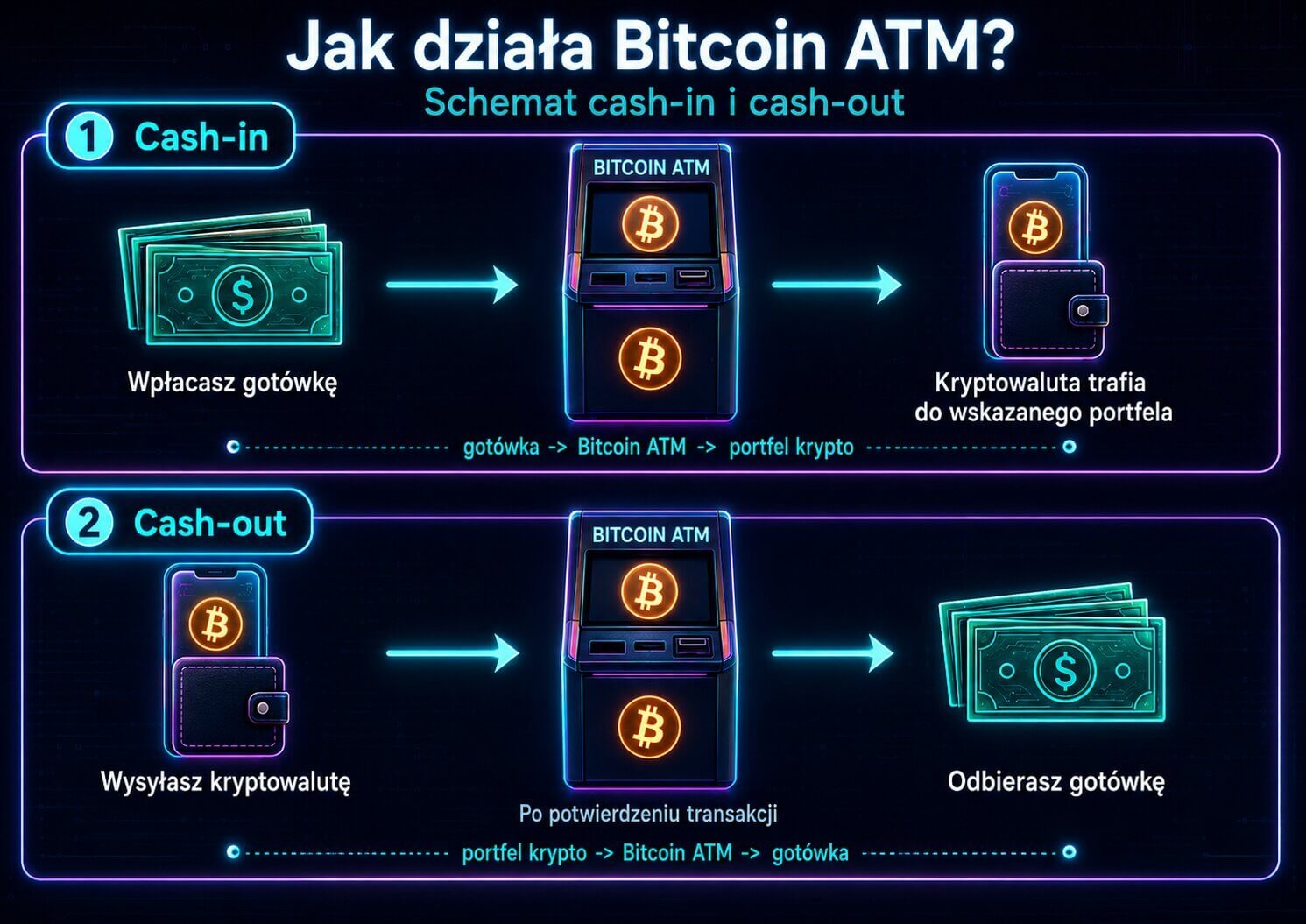
Scan the QR code with your phone to send cryptocurrency to the specified address. Scan the barcode with the ATM reader to receive your approved cash.
The time spent at the machine and the confirmation time on the network are two different things. Entering your information, scanning your wallet, and depositing banknotes can take a few minutes. The transaction may also appear in your wallet as “pending” fairly quickly. However, this does not mean it has been fully confirmed on the blockchain.
The first confirmation may appear after a few minutes, but the time depends on network congestion, the transaction fee, and the number of confirmations required by the operator.
If the status remains unchanged for an extended period, do not create another transaction blindly. Have the transaction number, date, time, and location ready, and then contact the operator. Keeping a printout makes it easier to identify the transaction.
The most common mistake in comparisons is equating the cost solely with a single commission. The user should evaluate the final result—that is, the amount of BTC received for a specific amount of cash, or the amount of cash paid for a specific amount of BTC.
The total cost may include the operator’s commission, the spread (the difference between the buy and sell rates), a network fee, a possible flat fee, and rounding resulting from the denominations of the banknotes. Not every component is necessarily present in every transaction. The final price displayed before confirmation is what matters.
According to information verified on September 19, 2026, the operator fees for the devices featured on the website ranged from 0 to 4%. Terms and conditions are subject to change, so please check the current rates before each transaction.
Example for 1,000 CHF
Let's assume you deposit 1,000 CHF. After taking all conditions into account, the platform displays the amount of BTC, which, based on the selected independent reference rate at that very moment, is worth 960 CHF. The effective difference is then 40 CHF, or 4 percent of the deposited amount. This does not automatically mean that the operator’s commission alone is 4 percent. The difference may also include the spread and other pricing components.
Comparison Formula. The effective percentage cost is the amount paid minus the market value of the BTC received, divided by the amount paid and multiplied by 100. The same valuation date and the same reference rate must be used for each channel being compared.
Each channel addresses a different problem. That’s why broad assessments—such as “high speed” or “moderate convenience”—don’t tell us much. A better comparison shows specific usage scenarios.
Bitcoin ATM It is a sensible choice when the financing method and the expected course of the transaction align with the physical exchange point.
Bitcoin ATM It might work if
Another channel might be better when
There is no one-size-fits-all best channel. It should be tailored to your source of funds, trading frequency, desired level of price control, and willingness to manage your portfolio on your own.
Yes. When making a purchase, the device sends BTC to the specified address. When selling, the user sends cryptocurrency from their own wallet to the address provided by the system. The wallet should remain under the user’s control.
As described on the Rothbard website, the process involves scanning a valid form of identification. The requirements of other providers may vary depending on their AML procedures and transaction terms.
Not every ATM on the market supports cash withdrawals. You need to check the location’s status and the availability of banknotes. You can initiate a cash withdrawal online or at the machine, and pick up the cash once the appropriate status is reached.
You should not do this. When making a transaction, use only a wallet that you control. A request to purchase cryptocurrency and send it to an address provided by someone else may be part of a scam.
Rothbard.eu is developing a platform that aggregates Bitcoin ATM locations in Switzerland, enabling users to find places where they can buy and sell BTC and other cryptocurrencies for cash. Bitcoin ATM kiosks are available in Zurich, Geneva, Basel, Lausanne, Lucerne, Lugano, Mendrisio, and other locations; their current status and cash availability can be checked online on the platform’s map.
This material is for informational purposes only. It does not constitute investment, tax, or legal advice.


